
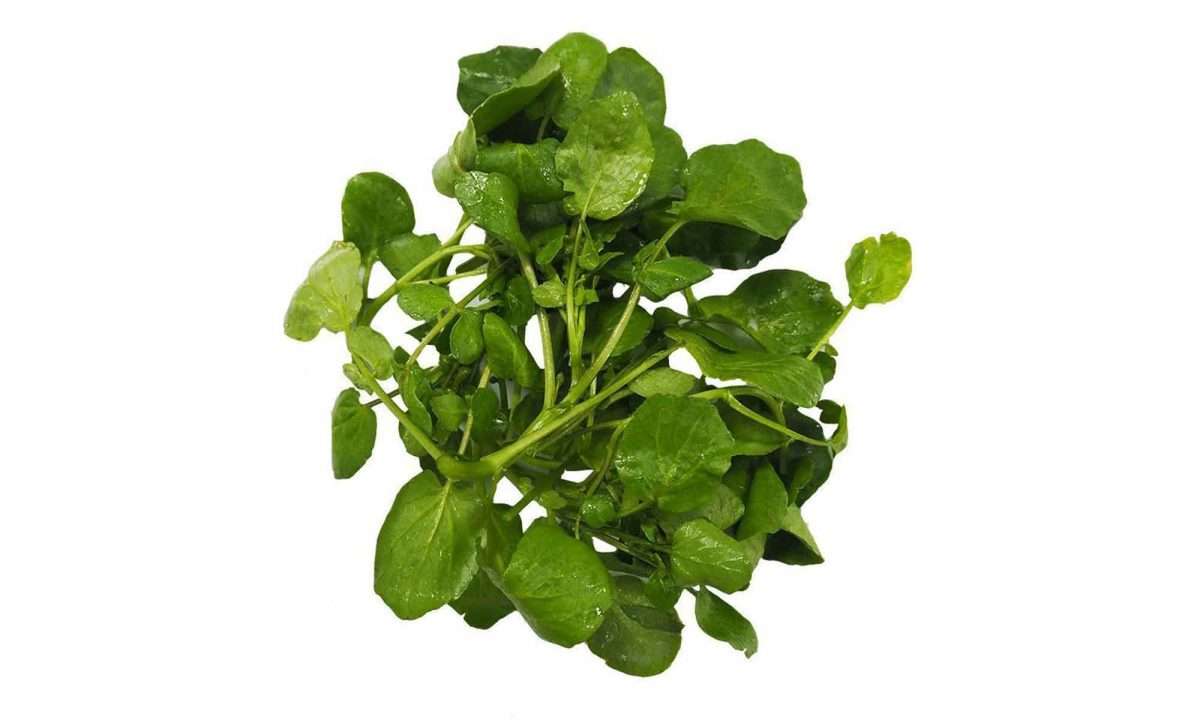
Watercress or yellowcress (Nasturtium officinale) is a species of aquatic flowering plant in the cabbage family Brassicaceae.

Watercress is a rapidly growing, perennial plant native to Europe and Asia. It is one of the oldest known leaf vegetables consumed by humans. Watercress and many of its relatives, such as garden cress, mustard, radish, and wasabi, are noteworthy for their piquant flavors.
The hollow stems of watercress float in water. The leaf structure is pinnately compound. Small, white, and green inflorescences are produced in clusters.
Watercress is listed in some sources as belonging to the genus Rorippa, although molecular evidence shows those aquatic species with hollow stems are more closely related to Cardamine than Rorippa. Despite the Latin name, watercress is not particularly closely related to the flowers popularly known as nasturtiums (Tropaeolum majus). T. majus belongs to the family Tropaeolaceae, a sister taxon to the Brassicaceae within the order Brassicales.
Ancient Romans thought eating it would cure mental illness. Twelfth-century mystic Hildegard of Bingen thought eating it steamed and drinking the water would cure jaundice or fever. Watercress was eaten by Native Americans. Some Native Americans used it to treat kidney illnesses and constipation, and it was thought by some to be an aphrodisiac. Early African Americans used the plant as an abortifacient; it was believed to cause sterility as well.
Leave a Reply