
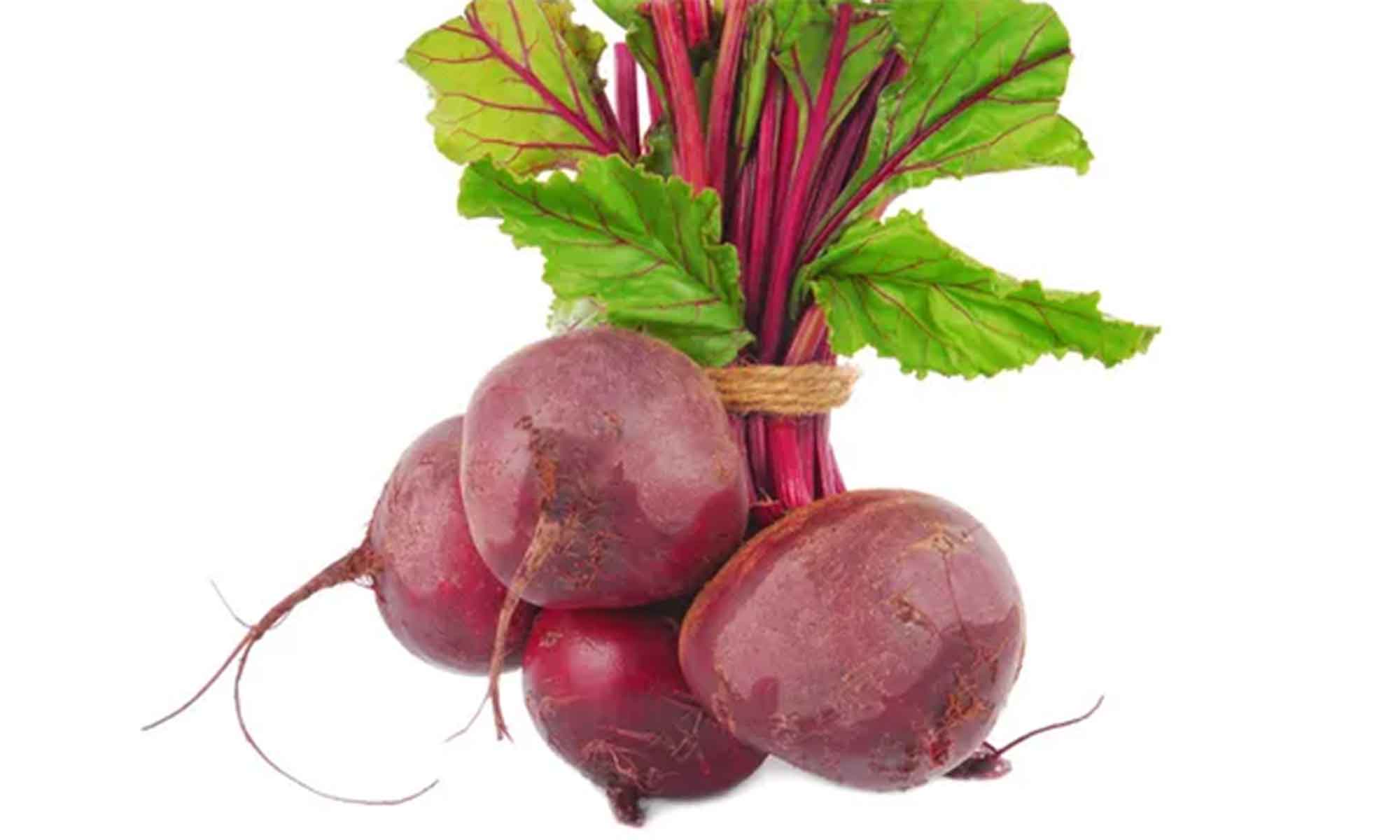
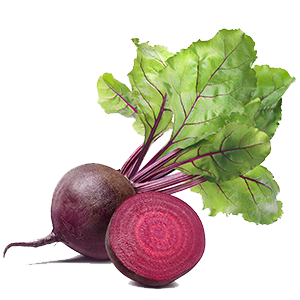
Beetroot is the taproot portion of a beet plant, usually known in North America as beets while the vegetable is referred to as beetroot in British English, and also known as the table beet, garden beet, red beet, dinner beet or golden beet.
It is one of several cultivated varieties of Beta vulgaris grown for their edible taproots and leaves (called beet greens); they have been classified as B. vulgaris subsp. vulgaris Conditiva Group.
Other cultivars of the same species include the sugar beet, the leaf vegetable known as chard or spinach beet, and mangelwurzel, which is a fodder crop. Three subspecies are typically recognized.
The domestication of beetroot can be traced to the emergence of an allele which enables biennial harvesting of leaves and taproot.[6] Beetroot was domesticated in the ancient Middle East, primarily for their greens, and were grown by the Ancient Egyptians, Greeks and Romans. By the Roman era, it is thought that they were cultivated for their roots as well. From the Middle Ages, beetroot was used as a treatment for a variety of conditions, especially illnesses relating to digestion and the blood. Bartolomeo Platina recommended taking beetroot with garlic to nullify the effects of “garlic-breath”.
During the middle of the 19th century, wine often was coloured with beetroot juice.
Food shortages in Europe following World War I caused great hardships, including cases of mangelwurzel disease, as relief workers called it. It was symptomatic of eating only beetroot.
Usually the deep purple roots of beetroot are eaten boiled, roasted, or raw, and either alone or combined with any salad vegetable. The green, leafy portion of the beetroot is also edible. The young leaves can be added raw to salads, whilst the mature leaves are most commonly served boiled or steamed, in which case they have a taste and texture similar to spinach. Beetroot can be roasted, boiled or steamed, peeled, and then eaten warm with or without butter as a delicacy; cooked, pickled, and then eaten cold as a condiment; or peeled, shredded raw, and then eaten as a salad. Pickled beetroot is a traditional food in many countries.
A large proportion of the commercial production is processed into boiled and sterilised beetroot or into pickles.
Betanin, obtained from the roots, is used industrially as red food colorant, to improve the color and flavor of tomato paste, sauces, desserts, jams and jellies, ice cream, candy, and breakfast cereals. When beetroot juice is used, it is most stable in foods with a low water content, such as frozen novelties and fruit fillings.
The red colour compound betanin is not broken down in the body, and in higher concentrations may temporarily cause urine or stools to assume a reddish color. Although harmless, this effect may cause initial concern due to the visual similarity to what appears to be blood in the stool, hematochezia (blood passing through the anus, usually in or with stool) or hematuria (blood in the urine).
Leave a Reply