
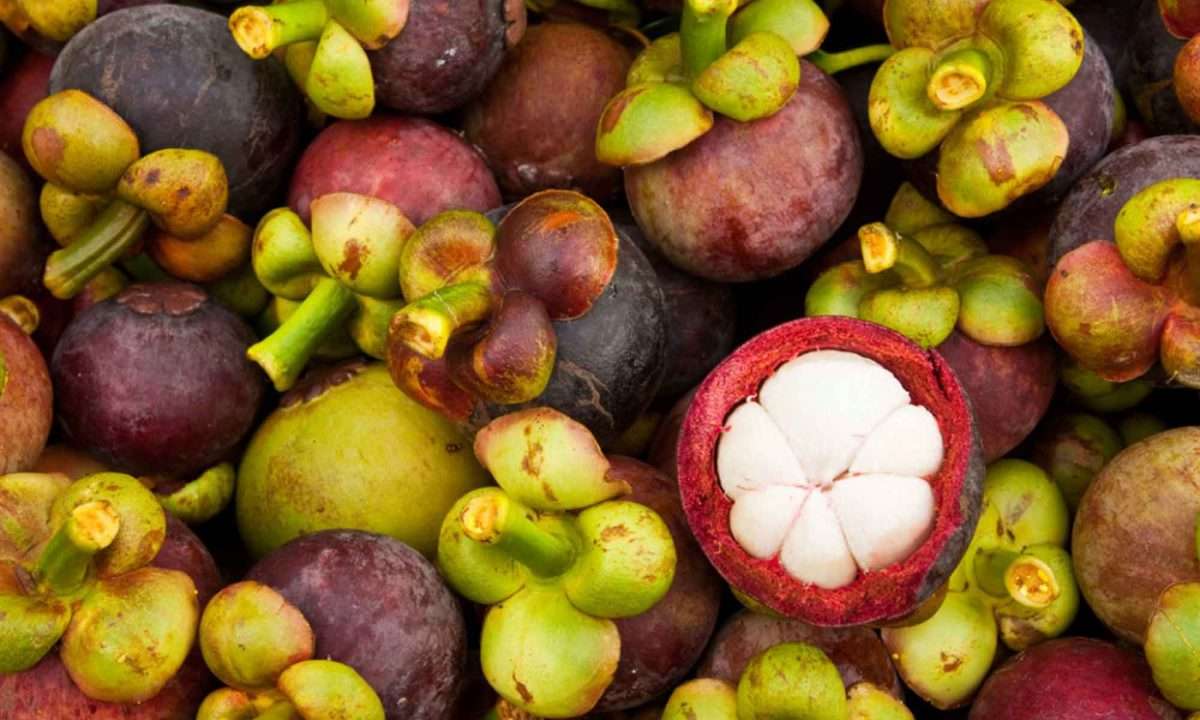
Mangosteen is a plant native to Southeast Asia. Highly valued for its juicy, delicate texture and slightly sweet and sour flavour, the mangosteen has been cultivated in Malaysia, Borneo, Sumatra, Mainland Southeast Asia, and the Philippines since ancient times.
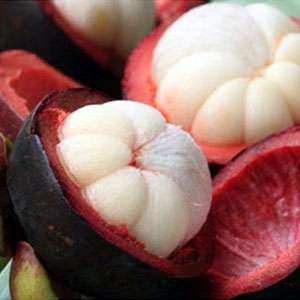
Mangosteen is a plant native to Southeast Asia. Highly valued for its juicy, delicate texture and slightly sweet and sour flavour, the mangosteen has been cultivated in Malaysia, Borneo, Sumatra, Mainland Southeast Asia, and the Philippines since ancient times.
The mangosteen was introduced into English greenhouses in 1855. Subsequently, its culture was introduced into the Western Hemisphere, where it became established in West Indies islands, especially Jamaica. It was later established on the Americas mainland in Guatemala, Honduras, Panama, and Ecuador. The mangosteen tree generally does not grow well outside the tropics.
In Southeast Asia, mangosteen is commonly known as the “Queen of Fruit”, and is frequently paired with durian, the “King of Fruit”. In Chinese food therapy, mangosteen is considered “cooling”, making it a good counterbalance to the “heaty” durian.
Mangosteen (Garcinia mangostana), also known as the purple mangosteen, is a tropical evergreen tree with edible fruit native to tropical lands surrounding the Indian Ocean. Its origin is uncertain due to widespread prehistoric cultivation. It grows mainly in Southeast Asia, southwest India and other tropical areas such as Colombia and Puerto Rico,where the tree has been introduced. The tree grows from 6 to 25 metres (20 to 82 feet) tall.[2] The fruit of the mangosteen is sweet and tangy, juicy, somewhat fibrous, with fluid-filled vesicles (like the flesh of citrus fruits), with an inedible, deep reddish-purple coloured rind (exocarp) when ripe.[2][4] In each fruit, the fragrant edible flesh that surrounds each seed is botanically endocarp, i.e., the inner layer of the ovary.[6][7] The seeds are of similar size and shape to almonds.
Leave a Reply